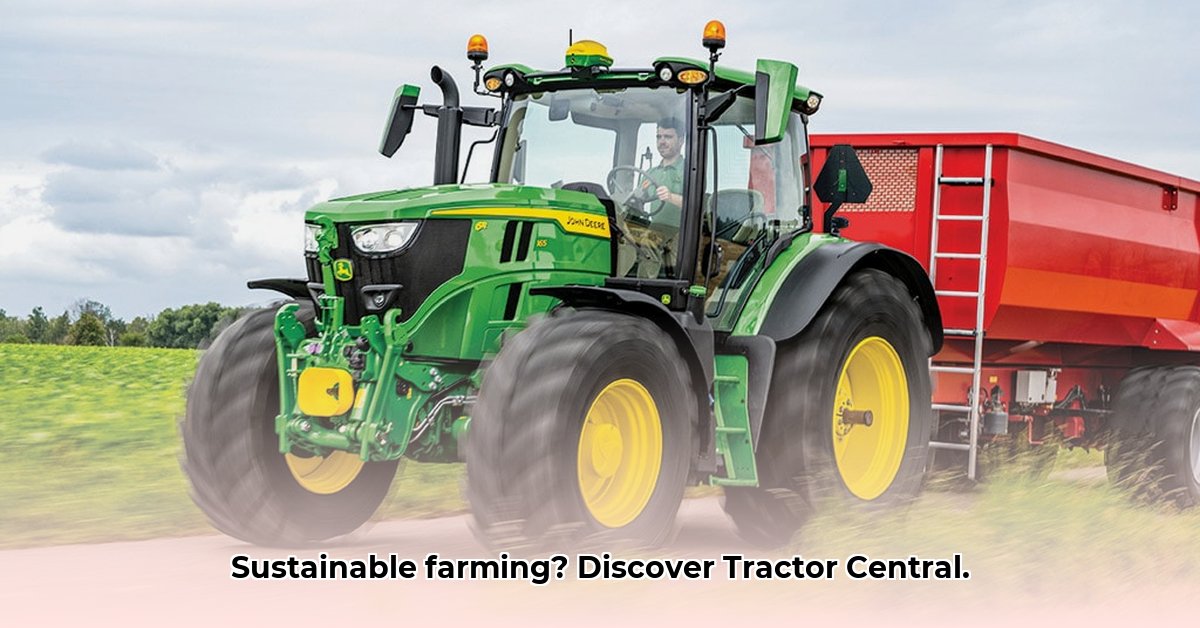
Tractor Central West Salem, situated in the heart of Wisconsin's agricultural region, serves as a vital resource for local farmers, providing equipment, parts, service, and expertise. This article examines Tractor Central's role in supporting sustainable farming practices, focusing on the adoption of precision agriculture technologies and highlighting the need for further research to fully quantify its environmental impact. Learn more about their sister location at Tractor Central Cameron.
Precision Agriculture: Enhancing Efficiency and Sustainability
Tractor Central's commitment to precision agriculture is evident in its offerings. They provide farmers with access to cutting-edge technologies like GPS-guided machinery and variable rate technology (VRT) for fertilizer and pesticide application. These technologies enable more precise and efficient resource management, promising benefits for both farm profitability and environmental stewardship. GPS guidance, for example (a system using satellite signals to guide farm equipment), allows for precise planting and application, minimizing overlap and reducing waste. VRT (which adjusts the application rate of inputs based on real-time data) ensures inputs are used only where needed, further reducing environmental impact and optimizing yields.
Measuring the Environmental Impact: A Complex Undertaking
While the potential environmental benefits of precision agriculture are substantial – reduced fuel consumption, optimized fertilizer use, and decreased pesticide runoff – accurately quantifying Tractor Central's contribution remains challenging. A lack of comprehensive data presents a significant obstacle. While reduced fuel consumption directly translates to lower greenhouse gas emissions, and efficient fertilizer application minimizes nutrient runoff into waterways, precise quantification requires extensive data collection and analysis.
How much fuel has actually been saved? What's the measurable reduction in fertilizer use? These are crucial questions that require detailed surveys and analysis going beyond anecdotal evidence. A robust research project, incorporating data from Tractor Central, farmer surveys, and independent environmental assessments, is necessary to establish concrete metrics.
Stakeholder Collaboration: A Shared Responsibility
Sustainable agriculture necessitates a collaborative approach. Tractor Central, farmers, government agencies, and environmental NGOs each possess a unique perspective and capacity to contribute. Effective collaboration is essential to maximize the positive impacts of precision agriculture.
Farmers, driven by economic viability, need to see a clear return on investment in precision agriculture technology. Government agencies can provide crucial support through subsidies, tax incentives, and funding for research initiatives. Environmental NGOs offer valuable expertise in environmental monitoring and impact assessment, helping ensure sustainable practices are genuinely environmentally beneficial. Finally, Tractor Central can facilitate adoption by providing training, technical support, and access to the latest technologies. A coordinated effort from all stakeholders will hasten the transformation to sustainable farming.
A Call for Further Research and Data Collection: Paving the Way Forward
Current data provides only a partial view of Tractor Central's influence on sustainable agriculture in the West Salem region. To comprehensively assess the actual environmental impact of precision agriculture, a more structured research approach is needed. This would involve:
- Detailed data collection: This includes precise measurements of fuel consumption, fertilizer and pesticide use, crop yields, soil health indicators, and water usage across farms using varying levels of precision agriculture technology.
- Quantitative analysis: The collected data must be rigorously analyzed to determine the correlation between the adoption of precision agriculture technologies and environmental outcomes. Statistical methods should account for confounding variables like weather and soil conditions.
- Stakeholder engagement: Surveys and interviews with farmers will provide crucial insights into the practical impacts of the technology and its economic implications.
- Independent verification: Environmental impact assessments by third-party organizations will offer an objective evaluation.
Only through a concerted commitment to research and data-driven analysis can we fully understand and optimize the contribution of Tractor Central and precision agriculture towards creating a truly sustainable agricultural future in West Salem.